More of a review of the voyage itself than the book. Book highlights here.
The 1999 cult classic Boondock Saints has an unforgettable scene about halfway through the movie where the FBI agent (played by Willem Dafoe) hot on the Saints' trail comes across a bullet-riddled crime scene and begins to give a play-by-play reenactment of what happened. (I'll spare the intermediate details, but it involves a stun gun, a whole lotta bodies dropping, and some badass slo-mo shooting.) The real magic is in Dafoe's final monologue where he (incorrectly) relives what the Saints were met with when leaving the crime scene:
They exited out the front door. They had no idea what they were in for. Now they're staring at six men with guns drawn. It was a fucking ambush. This was a fucking bomb dropping on Beaver Cleaverville. For a few seconds, this place was armageddon. There was a firefight! [There then proceeds to be a massive shootout between the Saints and their assailant.]
Dafoe was accurate except for one thing: it wasn't six men, it was one. One guy did what an FBI agent thought six could. One guy almost took out the deadliest vigilantes in Boston and still lived to tell about it.
In the Boondock Explorers, the Boondock-Saints-knockoff film starring Ernest Shackleton as an Antarctic explorer and Willem Dafoe as an FBI agent hot on his trail for inexplicable reasons, Dafoe has a similar explanation after finding the remnants of the Endurance's crew's belongings scattered throughout the ice and the ship itself sunk to the bottom of the Weddell Sea:
They exited out the front gangway. They had no idea what they were in for. Now they're staring at six animals, teeth drawn: a yeti, a leopard seal, a polar bear (how did that get here?), an emperor penguin, a killer whale, and an albatross. It was a fucking ambush. This was a fucking bomb dropping on Shacky Shackleville. For a few seconds, this place was snowmageddon. [There then proceeds to be a massive battle between the Explorers with harpoons and guns and the army of animals.]
Dafoe was still accurate except for one thing: it wasn't animals, it was the ice and wind that together destroyed a well-built ship and drove 28 hardened men to the brink of starvation and death, all without batting an eye.
The ice was unbreakable, insurmountable, defiant to their attacks and entreaties, mocking them the same way a club bouncer ignores the midget at his waist trying to move him aside to get into the exclusive venue:
A full head of steam was raised, all sails set, and the engines put full speed ahead in an attempt to break through to the crack. For three hours the ship leaned against the ice with all her might—and never moved a foot.
It was endless and expansive, as Lansing put into perspective:
The Endurance was one microcosmic speck, 144 feet long and 25 feet wide, embedded in nearly one million square miles of ice that was slowly being rotated by the irresistible clockwise sweep of the winds and currents of the Weddell Sea.
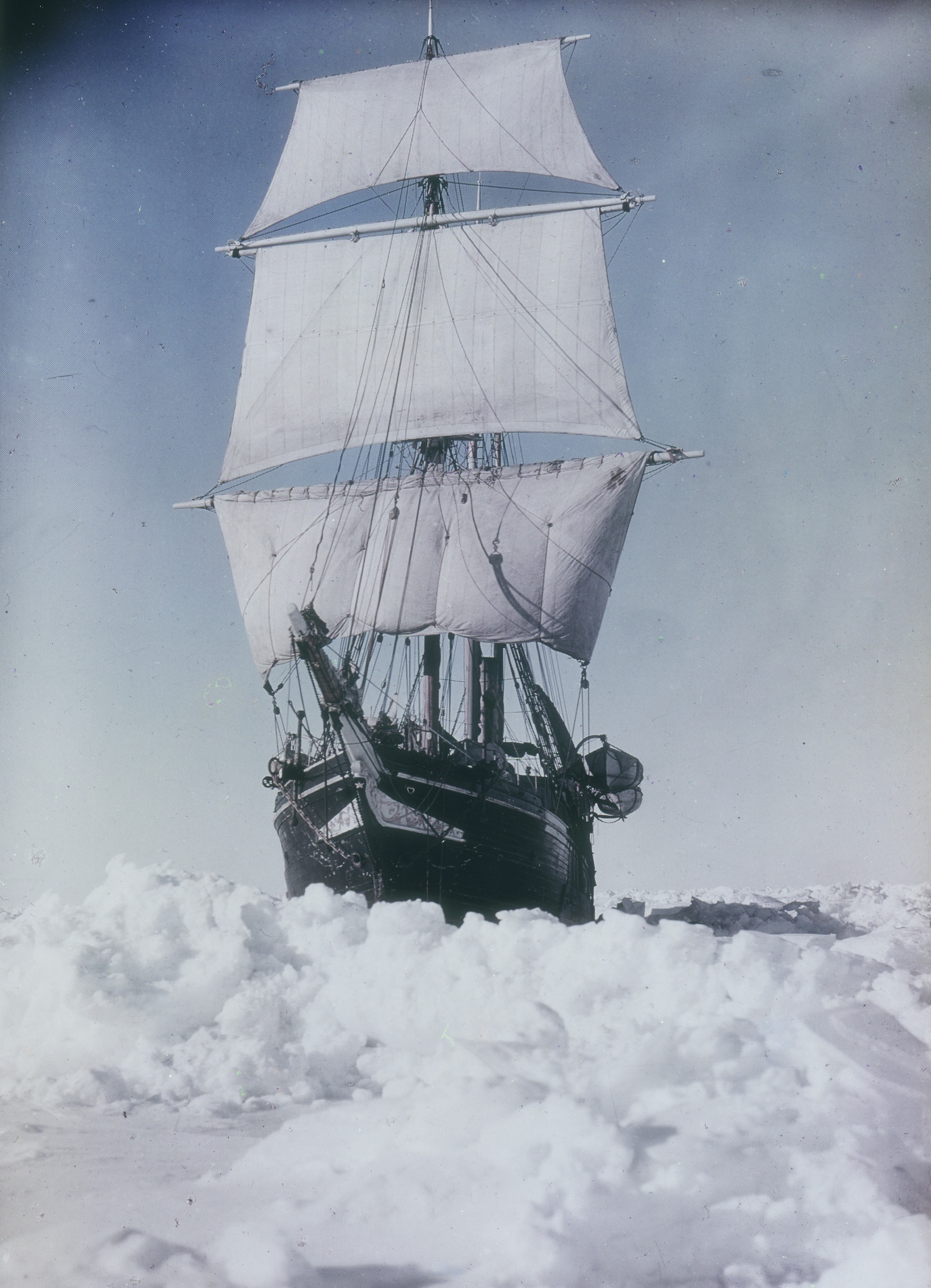
The "speckiness" is unfathomable. The Endurance's size compared to the ice was one to around 8 billion (3600 ft2:1 million mi2), or one pixel out of 1000 4K monitors, one grain of sand out of a cubic meter of beach, one second out of 250 years. Good luck getting rescued if your ship sinks and you have to hike out. Oh wait...
But seriously, imagine it. The desolation. A vast wasteland of white and cold that does not respond to anything except sun and wind and ocean currents, three things humans have no control over. It doesn't care what happens, it just does. This kind of environment is what changes an agentic man into a believer of God and the heavens, the goodness of which depends on the direction of the ice. Its scale is magnificent, towering over them and asserting dominance with ease. Lansing makes this—the fact that the crew had zero control over their environment and thus fate—abundantly clear in his descriptions and recounting of the events.
Other times the ice was kind and forgiving. It acted as a barrier between the men and certain death in the frigid water. It served as a vast, easy, free-going, safe transport where they could relax and play games, getting them closer to civilization without any work when the wind and current were in their favor.
Understanding the crew gives a contradictory explanation on how they were able to survive. On one hand, some of the men were veterans of the polar variety, being handpicked and experienced by Shackleton himself. Others were, well, less vetted than they could have and should have been, which is shocking given a) the trip is one of the first of its kind, b) Shackleton cared a lot about the leaders, and c) going to Antarctica is a crazy endeavor, especially in 1914, that requires certain skills and personality to do well at:
In the matter of selecting newcomers, Shackleton’s methods would appear to have been almost capricious. If he liked the look of a man, he was accepted. If he didn’t, the matter was closed. These decisions were made with lightning speed. There is no record of any interview that Shackleton conducted with a prospective expedition member lasting much more than five minutes.
The sheer volume of applications was no surprise if the urban—or some may say, antarctic—legend is true of Shackleton's advertisement in looking for men to join:
Men wanted for hazardous journey. Low wages, bitter cold, long hours of complete darkness. Safe return doubtful. Honour and recognition in event of success.
While this is almost certainly fictitious given the fact the original ad was never found, it might as well have been true given the men (and three girls) who applied. It also goes super hard, is very recognizable, and can be mixed and matched for any job. Lansing further explains that:
almost without exception, these volunteers were motivated solely by the spirit of adventure, for the salaries offered were little more than token payments for the services expected
I'm all for judging books by their covers, but Shackleton's haste is perhaps a step too far! Is the spirit of adventure really the best litmus test for who would fare well? Almost certainly not. Where does the adventure start and begin for these scallywags, some of whom had never left the country of England before? Does it start at the southern tip of Argentina, where if they take one more step, they'll be the farthest away from home they've ever been. That mindset would send them home at the first sign of trouble, ticking their adventure box while making their pants brown. Or is it once they make it to the South Pole and meet Santa Claus? Putting my Shackleton hat on, I'm looking for crew members who aren't there just for adventure, but also the idea of pushing human progress forward, of charting the unknown and being the one of the first to do so. Mindsets like this are what push people and expeditions forward, while almost guaranteeing a similar intensity and drive if things go wrong and they need to travel hundreds of miles and kill hundreds of cute, cuddly penguins.
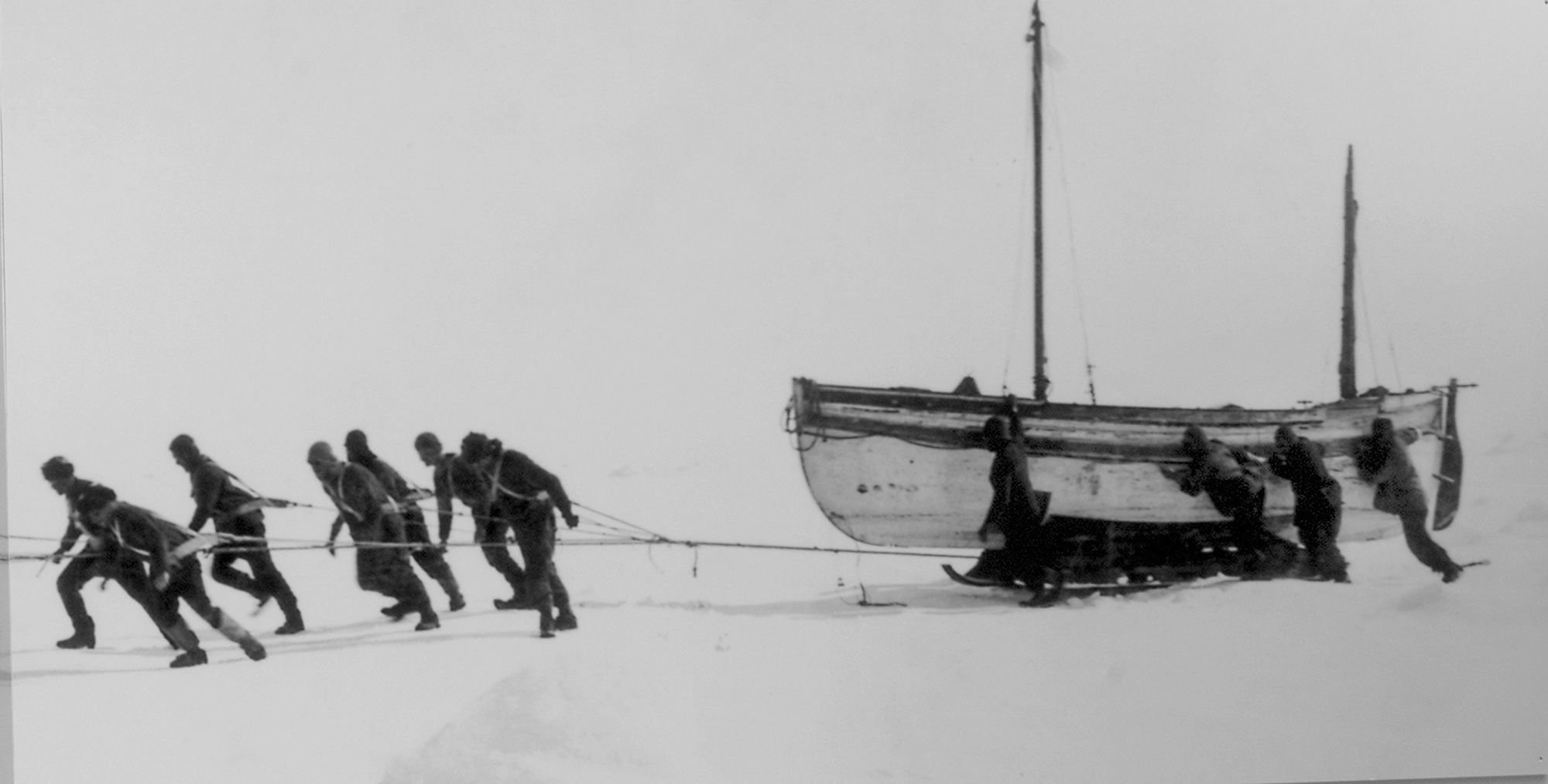
And yet despite this haphazard interview process, (spoiler alert!) they made it home. This kinda-unqualified group of men were able to muster up what was needed to survive: massacring innocent penguins and seals, pulling heavy-ass boats across miles of ice (and not the smooth, slippery kind!), and eating some pretty nasty shit because calories are calories when you're trying to live.
This gives me hope that I, too, can survive if the time came. I'm not an outdoorsman. I'm not the handiest of people when it comes to tools, home repairs, or anything of the sort. I'm not really an inventor of truly new things. But zooming out, I've probably consumed more knowledge—accurate, well-researched knowledge—through my perusings of Wikipedia and the internet in general in the past few years than any of these crew members had throughout their entire lives. Does this give me an edge? Maybe. I sure hope so. It's been said that necessity is the mother of invention, but people forget about the father: survival.
One of the times I've been closest to a really bad day (outside of driving on one-lane highways at high speeds with no median) was on a single-day hike to King's Peak. My hiking partner got altitude sickness while some nasty thunderclouds were forming above us, putting a rather uncomfortable image in my mind of me having to help a soaking wet, hypoxic, weak person through a slippery, full-exposure rock field while temperatures were in the 50s. Not fun and not safe! I assumed command of the two-person democracy with Gaddafian force and made the decision to get the fuck out of there ASAP—no stopping, no second-guessing, nothing. There was some power to this that made me feel better and safer; we just committed to what we decided was the best course of action and went for it without a second thought.
Shackleton's orders were followed both because he was the leader and because he was a great leader. Being the leader gives followers a natural person to look to in times of peril or indecision. Being a great leader gives people comfort in the decisions being made. These two combined make for a wonderful combo when stranded in the middle of some of the world's most inhospitable land with no communication and limited food.
That's not to say the decisions made were easy.
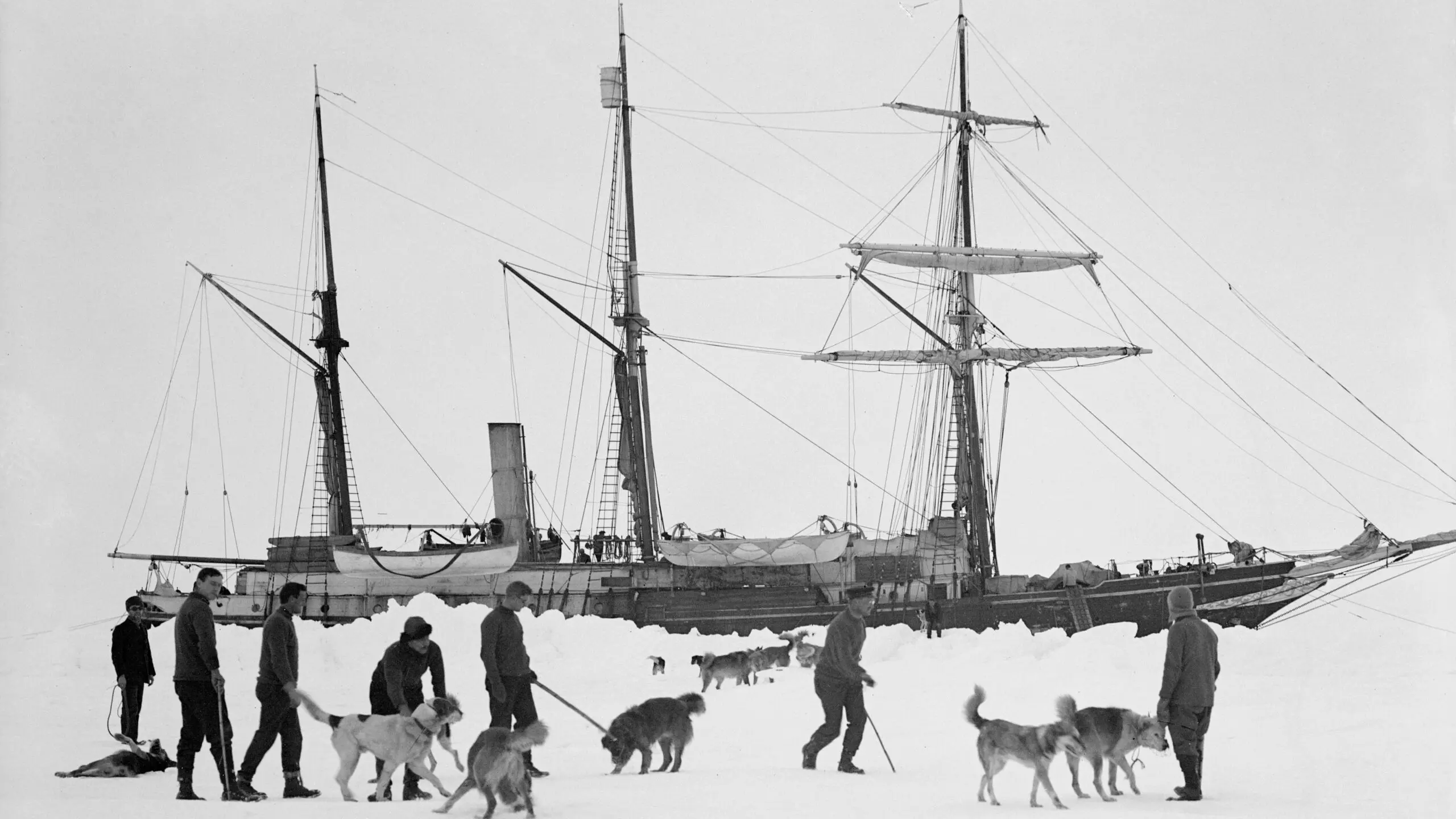
Dogs and even puppies had to be killed:
Tom Crean, tough and practical as ever, took the younger puppies and Mrs. Chippy some distance from camp and shot them without a qualm, but it was Macklin's duty to destroy Sirius, and he could hardly face the task. Reluctantly he got a 12-gauge shotgun from Wild's tent; then he led Sirius off toward a distant pressure ridge. When he found a suitable spot he stopped and stood over the little dog. Sirius was an eager, friendly puppy, and he kept jumping up, wagging his tail and trying to lick Macklin's hand. Macklin kept pushing him away until finally he got up nerve enough to put the shotgun to Sirius' neck. He pulled the trigger, but his hand was shaking so he had to reload and fire a second time to finish the puppy off.
A foot had to be amputated. Food had to be rationed to the point of extreme hunger and made from some not-so-appetizing parts:
For supper that night, Shackleton ordered Green to put some lumps of blubber into the seal meat stew so that the party might get accustomed to eating it. Some of the men, when they saw the rubbery, cod-liver-oil–flavored chunks floating around in their "hoosh," meticulously removed every trace.
But later they weren't so picky:
But the majority were so hungry they were delighted to gobble down every mouthful, blubber included.
These decisions had to be made because it meant death otherwise. The dogs would require food. The foot would become a hindrance to the rest of the body. Food was scarce. So in some sense, these weren't necessarily decisions in the do-it-or-don't way, they were requirements to live.
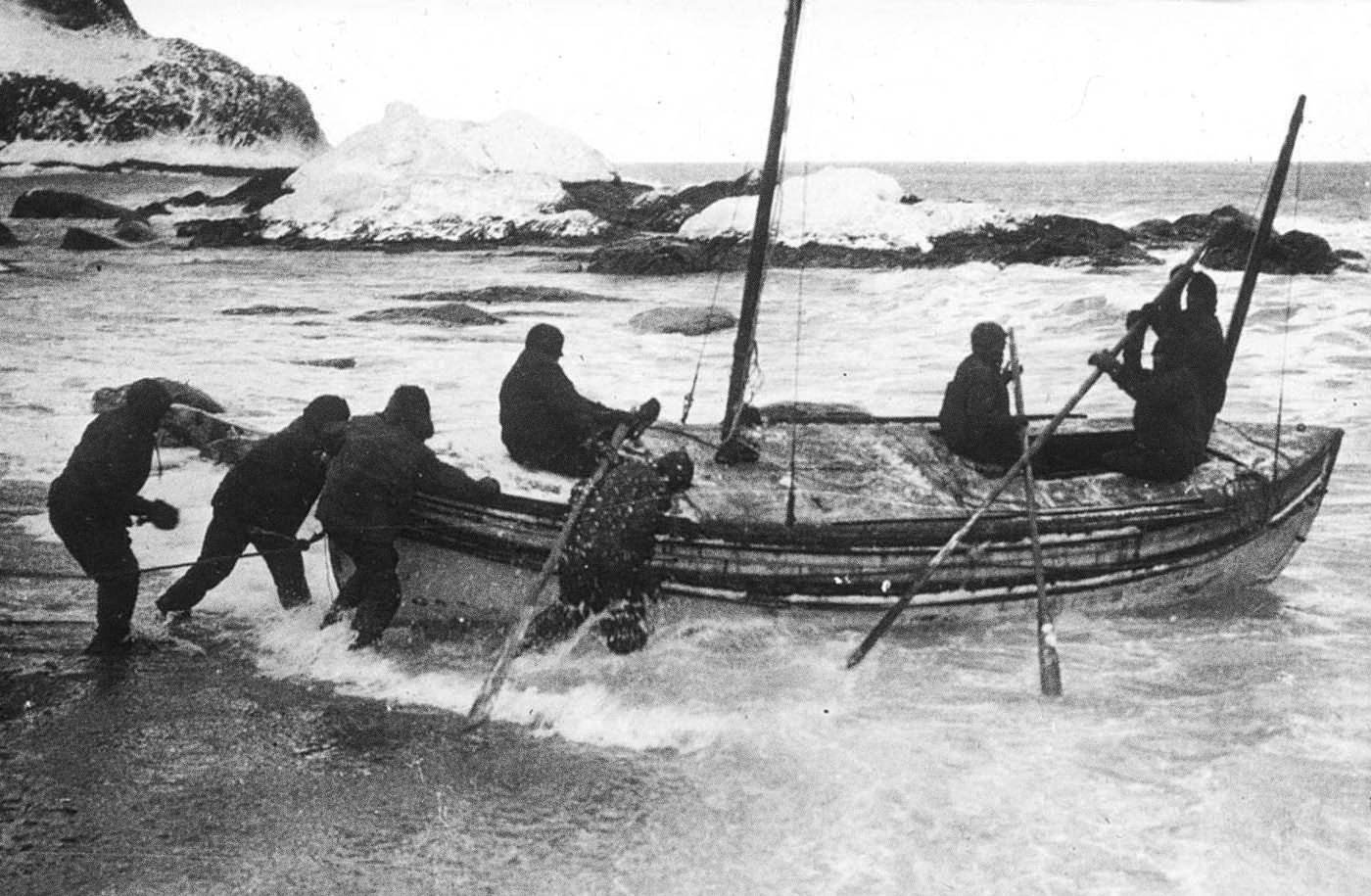
Sheer fucking endurance—the lowercase e version—was the name of the game. The Endurance is what took them to Antarctica and endurance is what brought them back home. Unfortunate event after unfortunate event left them in ever-worsening situations: getting the ship stuck in the pressure ridges and being unable to budge; the ship getting crushed and eventually sinking; the ice floes separating without warning; drifting in the wrong direction; making it to islands that were uninhabitable; landing on the wrong side of the final island and having to hike and climb and bushwhack on a path no one had ever before traveled with minimal food and drink available. The hits just kept coming and they just kept taking it on the chin like the badasses they were.
The hits were only one part of it. The uncertainty was another. While they had their sextant handy for finding their latitude and longitude, they didn't have a genie (Yeti?) in a bottle that would grant their wishes of the wind and current to be in a certain direction at a certain speed. Some days they found they had traveled at a good clip in the right direction, others gave bad news. The hits were variable in both frequency and intensity, forcing them to take advantage when the opportunity presented itself or forced their hand.
With the bravery and resilience came optimism and a sense of happiness, even after their ship had sunk:
Nevertheless, there was a remarkable absence of discouragement. All the men were in a state of dazed fatigue, and nobody paused to reflect on the terrible consequences of losing their ship. Nor were they upset by the fact that they were now camped on a piece of ice perhaps 6 feet thick. It was a haven compared with the nightmare of labor and uncertainty of the last few days on the Endurance. It was quite enough to be alive—and they were merely doing what they had to do to stay that way. There was even a trace of mild exhilaration in their attitude. At least, they had a clear-cut task ahead of them. The nine months of indecision, of speculation about what might happen, of aimless drifting with the pack were over.
When life gives you an ice floe, make snowballs and have snowball fights with your lads. Understandably, a positive mindset was Shackleton's overaching goal during their effort to survive:
Shackleton was concerned. Of all their enemies—the cold, the ice, the sea—he feared none more than demoralization.
Positivity is what laid the foundation for the endurance that ultimately saved their lives. Dissent and dissatisfaction were quickly squashed whenever it reared its ugly head, else it would spread and infect others quickly. The crew—and most importantly Shackleton—recognized the perniciousness of demoralization and banded together when needed to keep spirits high.
Shackleton, however, was not without his own faults and mistakes, often caused by his excessive hubris and optimism:
Like most of the others, he [Greenstreet, a crew member] considered the laying in of all possible meat the prudent thing to do, as any ordinary individual might. But Shackleton was not an ordinary individual. He was a man who believed completely in his own invincibility, and to whom defeat was a reflection of personal inadequacy. What might have been an act of reasonable caution to the average person was to Shackleton a detestable admission that failure was a possibility.
He tacitly expected those around him to reflect his own extreme optimism, and he could be almost petulant if they failed to do so. Such an attitude, he felt, cast doubt on him and his ability to lead them to safety.
The balance of optimism and realism is a difficult one to strike in a situation like this. Being too hopeful, too confident can be blinding to the reality of the situation and lead to doing some dumb shit or not doing some smart shit. Being too realistic would've caused them to accept that they were going to die and lead them to dying. Err on the side of being too optimistic, I say!
The way Lansing presents all of this elicits a sense of inspiration, awe, and pride in the ability of humans to overcome the harshest of environments in an effort to survive. Similar feelings come about when I watch the wonderful Landsailor music video or read about people doing massive feats of endurance in austere environments with limited support. Here these men are, hundreds to thousands of miles away from any semblance of civilization, shipwrecked, limited food, clothes in tatters, a harsh winter quickly approaching, and they manage to thrive with positive attitudes, games, and, most of all, hope.
Lansing's main purpose of the writing this was to tell the world of this feat in the best manner possible.
He did a superb job in collating all of the sources he used and evidently keeping them true with little embellishment (at least the internet doesn't seem to think he was untruthful, so good enough for me!). The writing was to the point and factual and still kept the reader on the edge and excited. I was able to avoid spoilers for the entire time.
What he does best is capture the vibe of everything: the excitement when they first set off; the apprehension that turns into despair as their boat doesn't move an inch in the thick ice; the rapid cycling between fear and boredom and pleasure while out on the ice waiting for something to happen. He also describes the barren, uncharted landscape these men are experiencing; the food and life on the ship; the rationale behind the decisions being made.
Not discussed in the book was the 2013 crossing of the Southern Ocean in a replica of Shackleton's boat that took him from Elephant Island to South Georgia. Impressive. but not the same because the Bannister effect is real. The new schoolers knew the crossing was possible, the old schoolers didn't. The new schoolers had some idea of what to expect, the old schoolers didn't. Seemingly impossible tasks become much more palatable when someone has done it before. This is another reason the entire voyage is so impressive: no one had done all of this before. The ice, the shipwreck, everything was new, everything was uncertain. They had to react accordingly to each new development; there was no flipping through the Antarctic Troubleshooting Guide for Inexperienced Explorers to see what to do when ice is splitting open between your feet revealing an icy, wet, cold death mere feet below.
Reenactments like this also aren't necessarily worth the effort: success shows that more than one person can do it (so it's not that cool), failure shows it was as difficult as it sounds or a fluke and the OGs got lucky. (Admittedly, I may be a bit harsh and inaccurate here, as people continue to call this story one of the greatest survival efforts of all time. And in true critic fashion, I have nothing to offer up in either the I'm-the-only-one-to-do-it or number-X-to-do-it departments, so I'm basically just a keyboard warrior shitting on guys going super hard and risking their lives in a dangerous, unpredictable place that is passively trying to kill them by the minute.) Of course, there's a balance to be had between reenacting difficult feats and pushing to find the next big thing. Content creators nowadays feel immense pressure to keep pushing the envelope lest they be considered dull or washed up by their fans and when compared to peers who are doing bigger and better things. This obviously creates an unhealthy environment at some point, but where is the line drawn? Mark Twight, Steve House, and Scott Backes climbed the Slovak (Czech) Direct non-stop in 60 hours. Dangerous, sure, but it sure as hell pushed the limits and showed other what was possible. But I digress.